
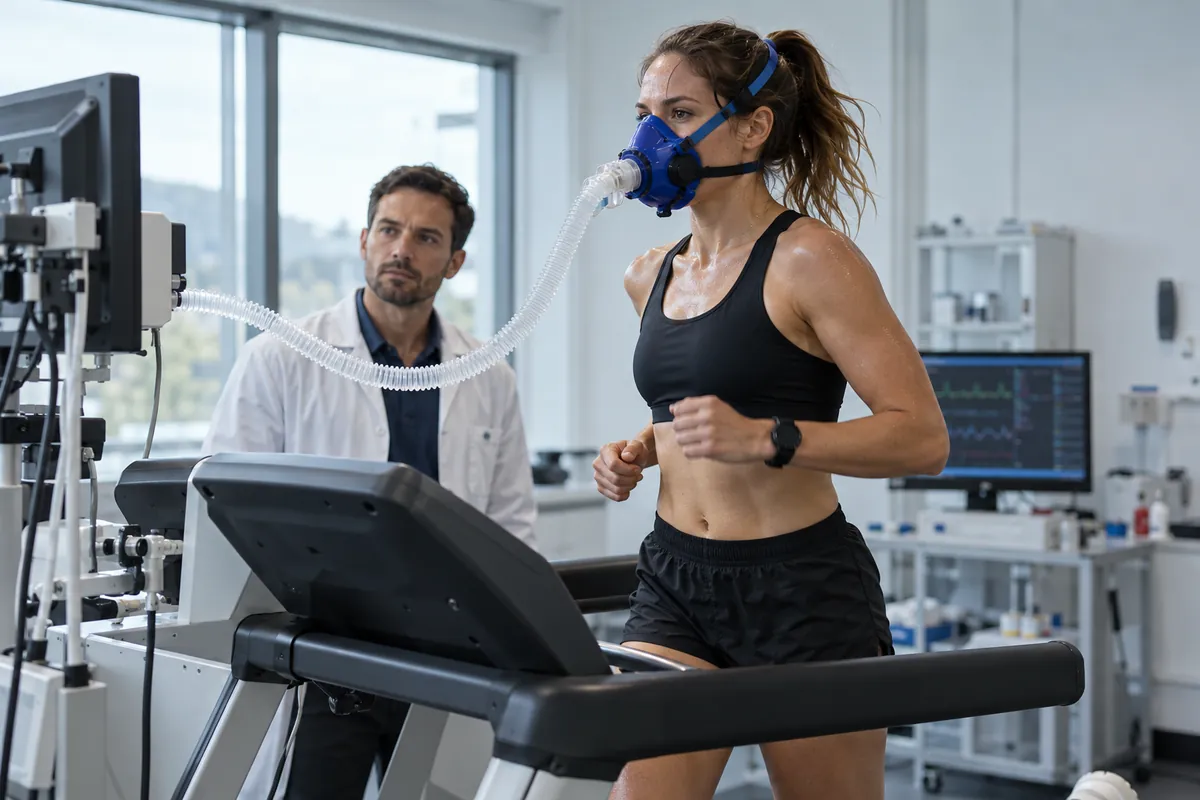
Capacity and sustainable work are different questions
VO2max describes maximum oxygen uptake. Lactate threshold concerns how lactate behavior changes as exercise intensity increases, with the exact definition depending on the test. Running economy adds another piece: how much oxygen a runner uses at a given speed. No single label explains the whole performance.
The test report should tell you the method
If you receive a threshold result, ask how the test defined it and what protocol was used. Different breakpoints and methods should not be treated as interchangeable. Keep the test date, sport and target units alongside the result so it can inform a real session.
Why the watch and the race may disagree
A device estimate is not the same thing as a laboratory measurement. A race result includes preparation, pacing, conditions and the course. If an estimate improves but a race does not, investigate those differences before deciding one number must be wrong.
Bring the concept back to tomorrow
Use the session goal to decide which reference matters. Sustaining a controlled effort for a defined duration asks a different question from a short maximal test. The useful outcome is a workout you understand and can execute, not a collection of physiological labels you have to defend.
Ask what changed in the running
If your watch score rises, look at the sessions behind it. Did you run faster at a comparable effort, race better or recover more consistently? Keep those observations with the number. A changed estimate can start a useful conversation without settling it.
Common questions
Is a fitness score a VO₂max test?
No. CORE Fitness Score is derived from race performance using a model. It does not measure oxygen uptake with laboratory equipment.
Why does the threshold definition matter?
Lactate and ventilatory thresholds use different observations and protocols. A label without the test definition can hide that difference.
Can two runners with similar VO₂max race differently?
Yes. Performance depends on more than maximal uptake. The cited physiology review discusses the contribution of sustainable utilization and efficiency.
What should change in training?
Start with the limiter supported by your actual history and test evidence. Chasing a higher single number is not automatically the most useful objective.
PUT IT INTO PRACTICE
Take the next step.
Sources & author
References and further reading. Research findings, practical examples and coaching interpretation are different kinds of evidence.