
Chicago Marathon coach. Flat and fast — done right.
Chicago is the PR course of the World Marathon Majors. I coach runners into a Chicago that actually executes the PR: a summer build that survives July humidity, a wind-aware race plan for Lake Shore Drive, and the pacing discipline to make a flat course feel slow before it makes you fast.
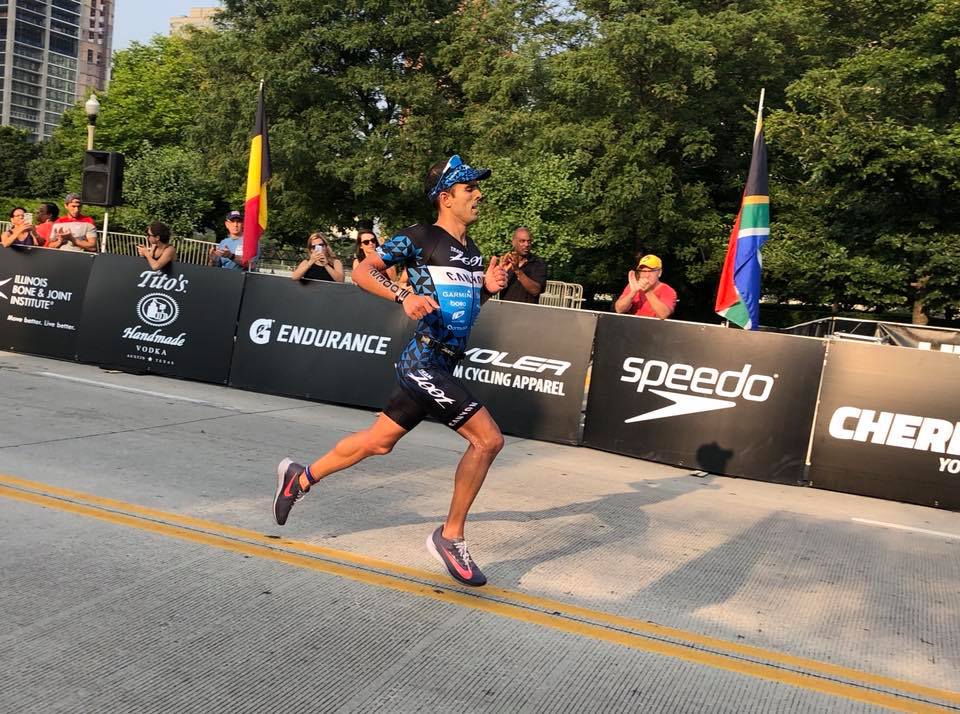
Chicago looks easy on paper. It isn't.
Chicago is flat (net −2 ft over 26.2), wide, and well-fueled. The course rolls north through Lincoln Park, swings west through Pilsen, then dives south down Lake Shore Drive to the Grant Park finish. There are exactly six meaningful turns. There are no hills.
What there is: October wind off Lake Michigan, late-summer heat that doesn't fully break until the first week of October, and the psychological tax of an honestly flat course — where you can hold goal pace for 20 miles before the cumulative cost lands all at once. Chicago is forgiving to a properly trained runner and brutal to an undertrained one. The flat course will not save you.
The three things that decide your Chicago
Chicago is an October marathon trained through Midwest July. If you're not banking dew-point-adjusted heat exposure 6–10 weeks out, your final 8K turns into a 5:30 mile/km hike.
Two of every three Chicago builds I run include a 16–18 mile out-and-back on an open course in moderate wind, so the athlete learns to redistribute pace by feel rather than splits.
There are no hills to slow you down. If you let early pace drift 5–8 sec/mi fast on the Lincoln Park downhill turns, you bonk at mile 20 on Halsted with no terrain to hide on.
A sample peak-build week
Week 13 of an 18-week Chicago build for an athlete chasing 3:00. Roughly 55 miles, two quality sessions, one long run with MP block.
Get the free Chicago Pacing Chart.
Mile-by-mile splits for goal times from 2:45 to 4:30, with a wind-adjusted contingency table for Lake Shore Drive. PDF.
- Mile-by-mile pacing for every common goal
- Wind contingency table (+/-5, 10, 15 mph)
- Lincoln Park / Pilsen / Lake Shore split structure
- Fueling timestamps tied to course markers
Chicago Marathon coaching FAQ
What makes Chicago a fast marathon?
Chicago is among the three fastest World Marathon Majors. Net elevation change is roughly flat (-2 ft), the course is wide, the grid layout is six 90° turns of architecture rather than rolling terrain, and the start/finish are inside Grant Park. The course is built to PR on — provided the wind doesn't show up.
When is the Chicago Marathon?
Always the second Sunday of October. Race-day weather in Chicago averages 48°F at the start and 62°F at the finish — close to perfect for racing.
How do I qualify for the Chicago Marathon?
Time qualifiers, time-stage qualifiers, charity runners, international tour operators, and the general drawing lottery (entry registration in late October-November). Time qualifying standards for Chicago 2026 are similar to BAA standards — but Chicago is more lenient on cut-offs than Boston, so hitting the standard is usually enough.
Is Chicago easier than Boston for a PR?
For most runners, yes. Boston's net descent looks fast on paper but the early downhill destroys quads before Newton; Chicago's pancake-flat grid lets you settle into rhythm and stay there. The variable is wind — Chicago can serve a 15+ mph headwind on Lake Shore Drive that costs you 30+ seconds per mile.
How long should I train for Chicago?
A focused 16–18 week build works for most runners within 10 minutes of their goal time. For sub-3:00 first-timers I prefer 20 weeks with a strength-led base block. Chicago's October date makes summer training the long pole — heat-acclimation work in July/August is non-negotiable.
Want a Chicago build that survives July?
Most Chicago PRs are made or lost in August humidity. I coach runners into a course-specific build that handles the Midwest summer and arrives in Grant Park sharp and rested. Apply or book a free call.
Boston-based · Trilingual EN/PT/ES · RRCA · USAT · TrainingPeaks L2 · 12× Boston qualifier