Strength Training for Endurance Athletes: What Actually Works
Two sessions a week, heavy and short. Why endurance athletes who lift heavy run, bike, and swim faster — and what to actually do in the gym.
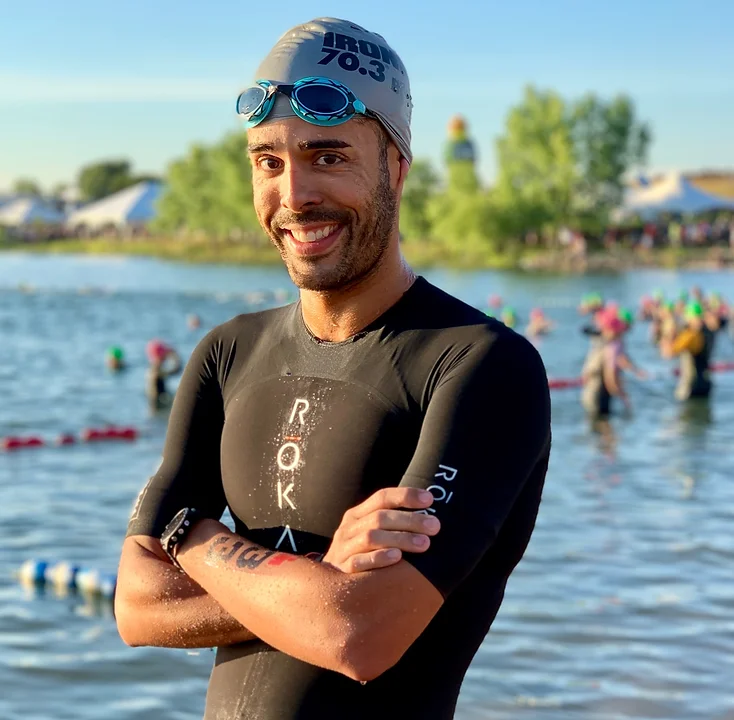 Breno MeloHead Coach · USA Triathlon, Road Runners Club of America, TrainingPeaks
For 20 years, endurance athletes were told to avoid lifting. Heavy weights would make you slow, bulky, injured. We now have a decade of solid research saying the opposite: heavy strength training improves running economy, cycling power, and time-trial performance — without adding meaningful muscle mass at endurance training loads.
Why heavy beats high-rep
Free VDOT reference card
One page: VDOT 30 to 85, predicted times from 5K to marathon, and E/M/T/I/R paces in min/km and min/mi. Print it, stick it on the fridge.
No spam. Unsubscribe anytime.
Or apply for 1:1 coachingSets of 3–6 reps at 80–90% of one-rep max recruit high-threshold motor units, improve tendon stiffness, and increase rate of force development. These are the exact qualities that translate to a more efficient stride and a more powerful pedal stroke. Three sets of 20 with light weights mostly just adds fatigue.
The minimum effective dose
- 2 sessions per week, 40–50 minutes each
- 3–5 compound lifts: squat, deadlift, hip thrust, press, pull
- 3–5 sets of 3–6 reps at 80–90% 1RM
- Long rest (2–4 min) between sets — this is not conditioning
If you finish a strength session out of breath, you trained the wrong system. Strength is a neural quality, not a cardio one.
Where to place it in the week
Best: same day as a hard endurance session, with several hours between them. This concentrates stress into one day and leaves easier days truly easy. If forced to choose, do hard endurance in the morning and strength in the evening. Never strength-train the day before a key quality endurance session.
What to skip
- High-rep circuits marketed as 'sport-specific'
- Isolation exercises before compound lifts
- Plyometrics in-season unless already adapted
- Anything that leaves you sore for 3+ days
References
Every physiological claim on this page traces to one of the primary sources below — the original paper, textbook or governing-body standard, not a secondary write-up.
Want this kind of thinking applied to your training?
Free 20-minute call. We'll talk about your race, your timeline, and whether 1:1 coaching is the right next step.
Book a discovery callEndurance coach since 2015. RRCA-certified, USAT Level II, TrainingPeaks Level 2. 12× Boston Marathon qualifier. Based in Fenway, Boston — coaching athletes worldwide in English, Portuguese, and Spanish.


Strength Training for Runners: The Two Sessions a Week That Change Everything
What runners actually need from the gym — the exercises, the sets, the reps, the timing — to run faster, stay healthy, and finish strong.