Boston Marathon Course Strategy: Mile-by-Mile From Hopkinton to Boylston
The Boston course punishes anyone who treats it like a flat marathon. Here's the mile-by-mile plan I give every BQ athlete I coach — pacing, fueling, and the four hills that decide your race.
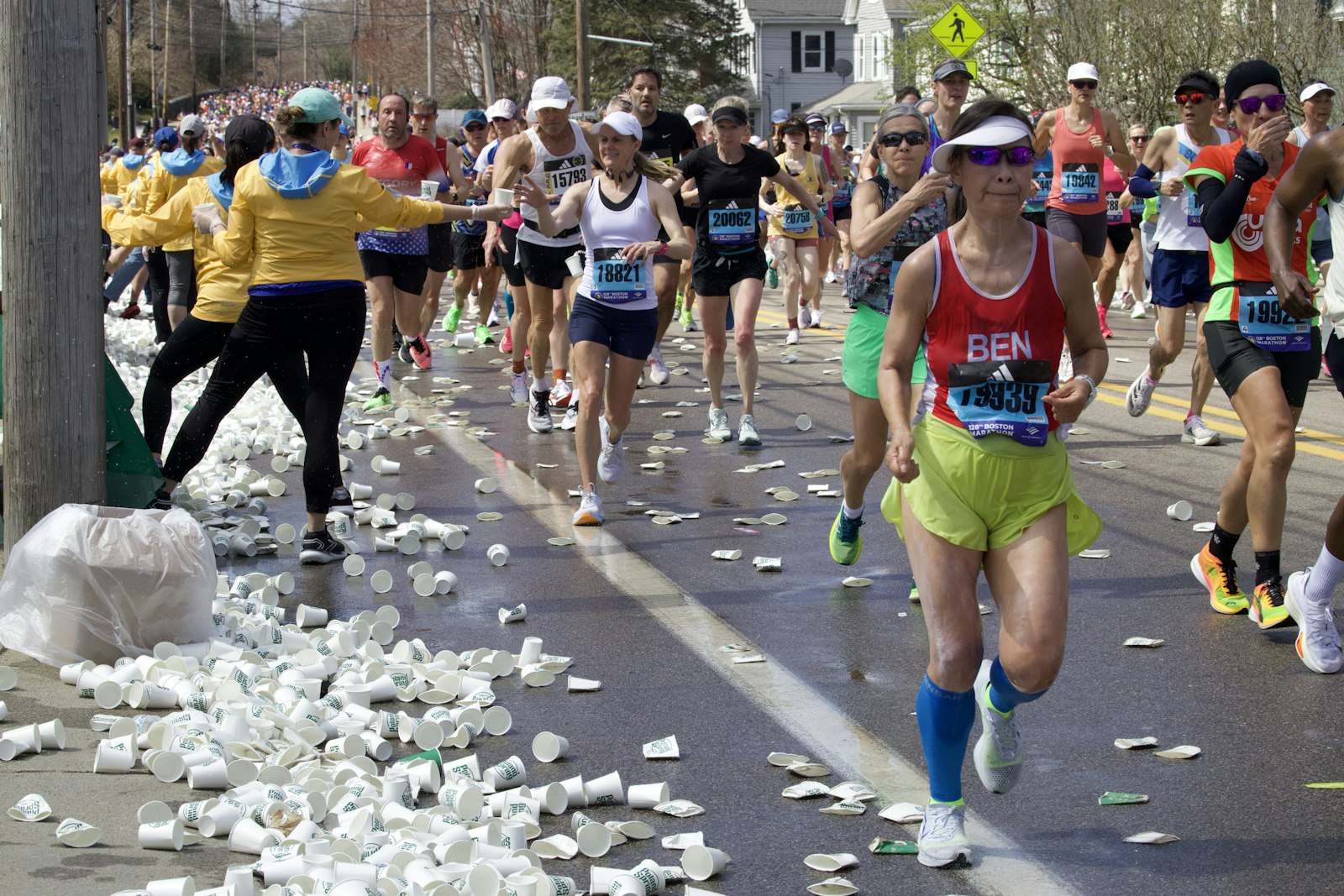
Boston is not a fast course. It's a famous course — and the two are different things. Net downhill on paper, brutal quads-then-hills reality on the road. Every year I see athletes hit a PR in March, then blow up at mile 18 in April because they raced the elevation profile instead of respecting it.
The course in one sentence
Boston is a point-to-point that drops sharply for the first 4 miles, rolls gently downhill through mile 15, climbs the four Newton Hills from mile 16 to 21, then drops again into Boston for the final 5 miles. Two of those phases will quietly cost you the race if you don't pace them correctly.
Miles 1–4: the Hopkinton drop
The first 4 miles lose ~300 ft. It feels free. It is not. Every second you bank in the first 10K comes out of your quads in Newton. Run these miles 10–20 seconds per mile SLOWER than your goal marathon pace. Yes, even on the descents — shorter stride, higher cadence, let gravity do the work without braking.
Rules for the opening 10K
- Goal pace MINUS 0:10–0:20/mi on the downhills
- Cadence 178–186, short quick steps, lean from the ankles
- Heart rate cap: aerobic threshold +5 bpm — if you're at LT in mile 3 you've already lost
- First gel at 25–30 minutes, not 45 — long start corral delay means you've been on your feet longer than the watch shows
Miles 5–15: settle into goal pace
From Ashland through Wellesley you're still net downhill but in rolling terrain. This is where you lock into goal marathon pace and stay disciplined. Wellesley scream tunnel (~mile 13) will pull a free 10 seconds out of you — let it happen, then immediately come back to plan. Half-marathon split should be 30–60 seconds SLOWER than half your marathon goal.
If you cross the half-way mat at exactly half of your goal time, you're already three minutes ahead of where you should be. Boston demands a positive first-half split, not a flat one.
Miles 16–21: the Newton Hills
Four hills, not one. The famous Heartbreak Hill at mile 20.5 is actually the smallest of the four — but it arrives when your quads are already shredded from the downhills. Run the hills by EFFORT, not pace. Allow your pace to slow 20–40 seconds per mile on the climbs, but keep cadence and effort the same. Recover on every descent — that is the only way you reach mile 21 with legs.
The four hills in order
- 01Mile 16.0 — Newton Lower Falls climb after the Route 128 underpass (~80 ft)
- 02Mile 17.5 — Commonwealth Ave climb past the firehouse, the right-hand turn (~90 ft)
- 03Mile 18.5 — second Comm Ave roller (~70 ft)
- 04Mile 20.5 — Heartbreak Hill itself (~88 ft over 0.4 mi)
Miles 22–26.2: the Brookline descent and Boylston
If you raced miles 1–4 with discipline, you arrive at Cleveland Circle (mile 22) with something in the tank. The next 4 miles are net downhill — but your quads are wrecked. Resist the urge to surge. Maintain cadence, lean slightly forward, let the road bring you home. The right onto Hereford, the left onto Boylston, and then 600m of straight road to the finish. Save one match for that final straight.
Fueling: the long-corral problem
Wave start times mean most athletes have been awake 5+ hours by the time they cross the start mat. Carb-load 24–48 hours out as normal, but plan for a second breakfast at 9:00–9:30 a.m. in your corral: a banana, a small pouch of applesauce, or a pre-race gel. Then 60–90 g carbs/hour from mile 4 onward — usually one gel every 25–30 minutes plus on-course sports drink.
Hydration in 50–65°F Boston weather
- 500–750 ml fluid per hour, mostly with electrolytes
- Sodium target: 500–800 mg/hr — Boston is humid, not just cold
- Walk the aid stations the first three times to actually get fluid in
- If it's a hot year (>65°F), reduce goal pace by 1.5–2.5% from the start — not at mile 18 when you've already cooked
Race-week logistics that matter
- Sleep budget: 3 nights out is the most important — race-eve nerves cost you sleep no matter what
- Shoes: race in a pair with 50–150 km on them, broken in but not dead
- Bus to Hopkinton: bring a throwaway jacket, hand warmers, and a sealed snack — Athlete's Village is cold and slow
- Plan your A goal, B goal, and C goal pace splits — write them on your forearm
If you want this plan tailored to your specific BQ goal, weekly volume, and race-week logistics, that's part of what 1:1 coaching covers — including a course-specific pacing chart you can wear on race day.
Want this kind of thinking applied to your training?
Free 20-minute call. We'll talk about your race, your timeline, and whether 1:1 coaching is the right next step.
Book a discovery callEndurance coach since 2015. RRCA-certified, USAT Level II, TrainingPeaks Level 2. 12× Boston Marathon qualifier. Based in Fenway, Boston — coaching athletes worldwide in English, Portuguese, and Spanish.
Read full bio

Boston Marathon Qualifying Times: The Real Story Behind BQ Standards
Hitting the published BQ standard isn't enough anymore. A coach's breakdown of how the qualifying system actually works, the cutoff math, and the buffer you need to make the field.