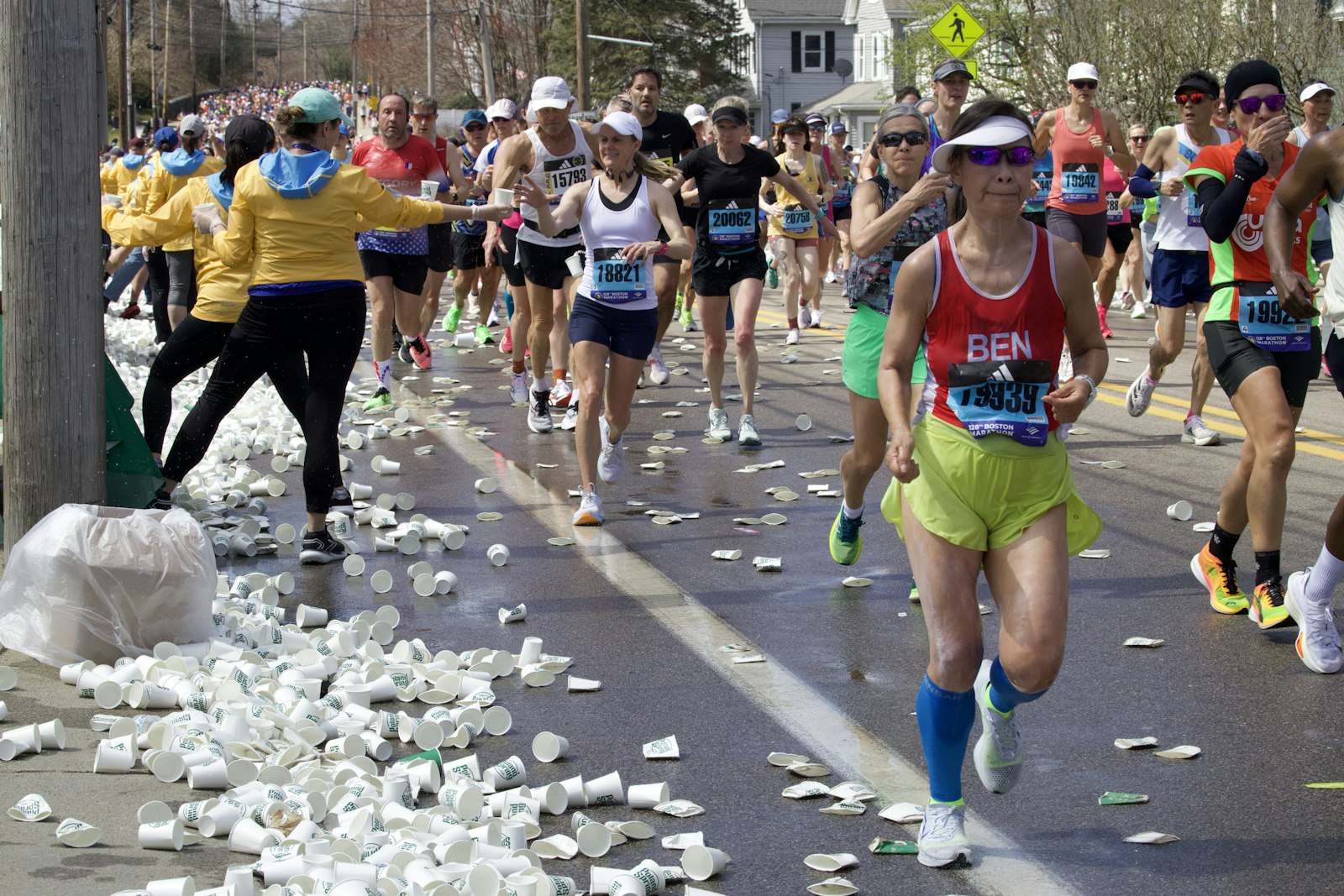
Boston Marathon Qualifying Times: The Real Story Behind BQ Standards
Hitting the published BQ standard isn't enough anymore. A coach's breakdown of how the qualifying system actually works, the cutoff math, and the buffer you need to make the field.

The Boston Marathon publishes a qualifying time for every age group, and every year tens of thousands of runners hit that time — only to be told they didn't get in. The published standard is the bare entry ticket; the actual cutoff is determined by how many qualifiers apply and how many slots are open. Here's what you actually need to run.
The two-number system
Boston has a published qualifying standard for each 5-year age group, but the application window decides who actually races. Every September, the BAA accepts qualifying times from a roughly 18-month lookback window, sorts everyone fastest first within their age group, and draws a line where the field fills. Anyone slower than the line — even if they 'qualified' on paper — is out.
Recent cutoffs (the math nobody tells you)
- 2020 (for 2021 race) — 7:47 buffer required
- 2024 (for 2025 race) — 6:51 buffer required
- 2025 (for 2026 race) — 2:51 buffer required (field expansion eased it)
- Long-term planning assumption: target BQ minus 5:00 minimum
Current qualifying standards (Men)
- 18–34: 3:00:00
- 35–39: 3:05:00
- 40–44: 3:10:00
- 45–49: 3:20:00
- 50–54: 3:25:00
- 55–59: 3:35:00
- 60–64: 3:50:00
- 65–69: 4:05:00
- 70–74: 4:20:00
Current qualifying standards (Women)
- 18–34: 3:30:00
- 35–39: 3:35:00
- 40–44: 3:40:00
- 45–49: 3:50:00
- 50–54: 3:55:00
- 55–59: 4:05:00
- 60–64: 4:20:00
- 65–69: 4:35:00
- 70–74: 4:50:00
Choosing a BQ-friendly course
Some marathons are clearly faster than others. Chicago, Berlin, and Indianapolis Monumental routinely produce massive PRs. Avoid hilly net-uphill courses for a BQ attempt — you're already trying to bank 5+ minutes of buffer; don't fight terrain too. Verify USATF certification before paying the entry fee.
The training reality
BQ pace for a 40-year-old male is 7:15/mile for 26.2 miles. To race that, you need to comfortably train at 8:30/mile for long runs, hit 6:45/mile for tempo work, and have at least 18 weeks of 50+ mile weeks behind you. There is no shortcut. Coaches who promise one are selling something.
The runners who BQ in their first try are the ones who trained for a marathon. The runners who BQ in their fifth try are the ones who trained for Boston.
Tactical execution on race day
- 01Pick a flat, certified, weather-friendly course (spring or fall)
- 02Train specifically for the goal pace — 16–20mi long runs with 8–12mi at goal pace
- 03Front-load carbs 36 hours out, fuel 60–90g/hr in race
- 04Negative-split the race — even-split BQs are 10× rarer than positive-split blow-ups
Questions athletes ask about this
- Do I need to beat the BQ standard to get into Boston?
- Yes, and usually by a buffer. In recent years buffers have ranged from 0 to nearly 8 minutes depending on demand and field size. Target BQ minus 5 to be safe.
- When do BQ standards change?
- The BAA updates standards periodically. The current set tightened by 5 minutes across the board for the 2027 race (qualifying window opened September 2025).
- Can I qualify on a downhill course?
- Yes, if it's USATF certified and meets BAA elevation rules (net drop under 1m/km). Boston itself is net-downhill; some qualifying courses (Revel races, etc.) are aggressively so but still legal.
- What's the qualifying window for the 2027 Boston Marathon?
- Roughly September 2025 through registration in September 2026. Always confirm exact dates on the BAA website.
- If I miss the cutoff, what happens to my qualifying time?
- It expires after that registration cycle. You'd need to qualify again — same race or another — within the next window.
Want this kind of thinking applied to your training?
Free 20-minute call. We'll talk about your race, your timeline, and whether 1:1 coaching is the right next step.
Book a discovery callEndurance coach since 2015. RRCA-certified, USAT Level II, TrainingPeaks Level 2. 12× Boston Marathon qualifier. Based in Fenway, Boston — coaching athletes worldwide in English, Portuguese, and Spanish.
Read full bio

Boston Marathon Course Strategy: Mile-by-Mile From Hopkinton to Boylston
The Boston course punishes anyone who treats it like a flat marathon. Here's the mile-by-mile plan I give every BQ athlete I coach — pacing, fueling, and the four hills that decide your race.