Fueling the Long Ride: A Practical Carb Strategy
How many grams of carbs per hour, when to start, and what to do when your gut shuts down at hour three.
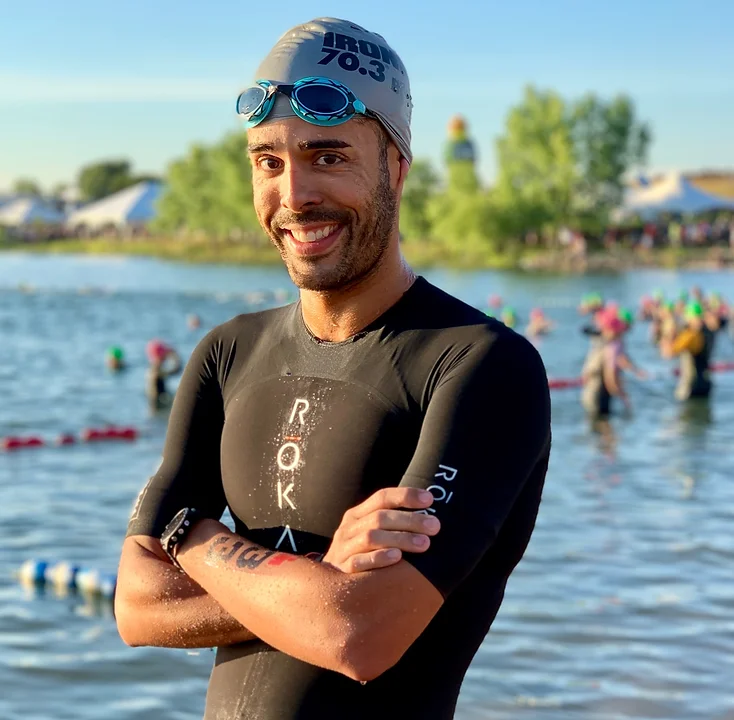 Breno MeloHead Coach · USA Triathlon, Road Runners Club of America, TrainingPeaks
Fueling is a trainable skill. The gut adapts the same way muscles do — with progressive, specific exposure. If you've ever bonked at hour three of a long ride, the problem isn't usually willpower. It's that you tried to ingest more than your gut had been trained to absorb.
Start with a baseline
24-week Ironman roadmap summary
The full 140.6 build on one page: phase-by-phase volume, the key sessions in each block, and the taper that gets you to Kona-day fresh.
No spam. Unsubscribe anytime.
Or apply for 1:1 coachingFor any session over 90 minutes, default to 60 g of carbohydrate per hour. Most athletes tolerate this immediately. The mistake is starting at 90+ g/hr without progressive exposure — your gut hasn't built the transporters yet, and you end up bloated and nauseous instead of fueled.
The progression that works
- 01Weeks 1–3: 60 g/hour on every ride over 90 minutes
- 02Weeks 4–6: 75 g/hour on long rides; keep 60 g on shorter sessions
- 03Weeks 7–9: 90 g/hour on race-pace long rides
- 04Weeks 10–12: 100–120 g/hour on race-simulation efforts only
Mix your sugars
Use a 2:1 ratio of glucose (or maltodextrin) to fructose. Glucose maxes out at about 60 g/hr through the SGLT1 transporter. Adding fructose recruits GLUT5 — a second pathway — and lets you absorb up to 120 g/hr without overwhelming either system.
Begin fueling within the first 30 minutes — not when you start to feel tired. By the time you feel depleted, you're already two hours behind catching up.
When the gut shuts down
Mid-session GI distress is almost always solvable in real time if you act fast. Back off the intensity by 15–20% for ten minutes, sip plain water, and pause solid food. Once symptoms ease, restart fueling with a small amount of liquid carb. Most athletes can recover the session if they catch it early.
Race-day mistakes to avoid
- Trying a new brand or gel flavor on race day
- Skipping early fuel because you 'feel fine'
- Caffeine with no caffeine training in the prior block
- Hydration without sodium on hot days
References
Every physiological claim on this page traces to one of the primary sources below — the original paper, textbook or governing-body standard, not a secondary write-up.
- 01Jeukendrup AE (2014). A step towards personalized sports nutrition: carbohydrate intake during exercise. Sports Medicine 44(Suppl 1):S25–S33. doi:10.1007/s40279-014-0148-z
- 02Thomas DT, Erdman KA, Burke LM (2016). Position of the Academy of Nutrition and Dietetics, Dietitians of Canada, and the American College of Sports Medicine: Nutrition and Athletic Performance. Medicine & Science in Sports & Exercise 48(3):543–568. doi:10.1249/MSS.0000000000000852
Want this kind of thinking applied to your training?
Free 20-minute call. We'll talk about your race, your timeline, and whether 1:1 coaching is the right next step.
Book a discovery callEndurance coach since 2015. RRCA-certified, USAT Level II, TrainingPeaks Level 2. 12× Boston Marathon qualifier. Based in Fenway, Boston — coaching athletes worldwide in English, Portuguese, and Spanish.
Marathon Fueling Strategy: The Carb Math That Wins the Last 10K
Bonking isn't fitness — it's fueling. A practical breakdown of carb intake, hydration, and the gut training that lets you actually hit your goal pace at mile 22.