The Taper Myth: Less Isn't Always More
Why most athletes botch their taper — and the simple framework I use with every athlete to arrive sharp instead of flat.
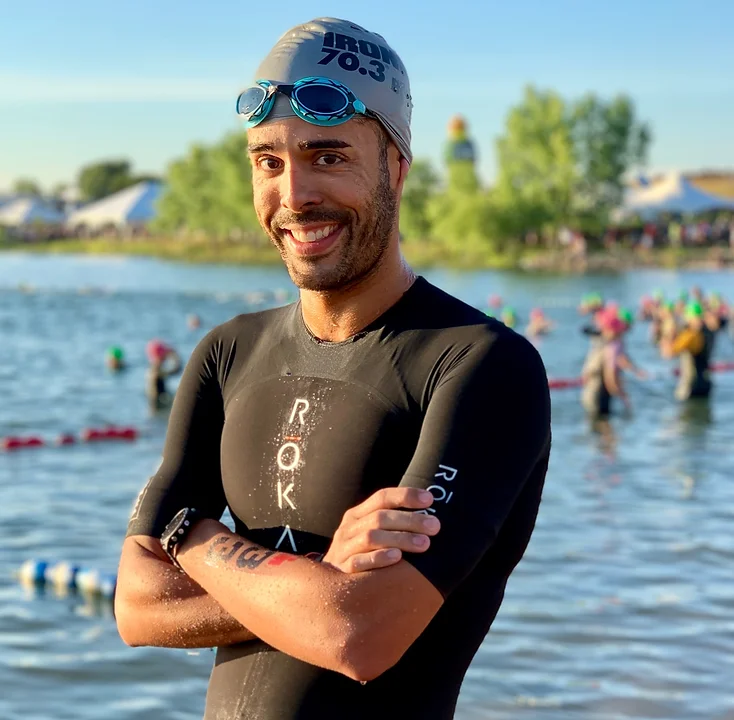 Breno MeloHead Coach · USA Triathlon, Road Runners Club of America, TrainingPeaks
Taper is the most misunderstood phase of training. Too much rest and you arrive at the start line flat, sluggish, and detuned. Too little and you're racing on tired legs. Both kill the race.
The principle: cut volume, keep intensity
The BQ Playbook — 16-week Boston framework
Free 16-week qualifying block at three volume tiers, the Newton Hills workout library, and the race-week taper. Delivered to your inbox.
No spam. Unsubscribe anytime.
Or apply for 1:1 coachingReduce total weekly hours by 30–50% over 2–3 weeks. Keep the quality sessions — just shorter. A few sharp efforts at race pace remind the body what it's about to do. The fitness is already in the bank; taper is about removing fatigue without losing sharpness.
A 3-week marathon taper
- 01Week -3: 80% of peak volume, full intensity sessions
- 02Week -2: 60% of peak volume, intensity sessions trimmed to 70% duration
- 03Race week: 40–50% of peak volume, two short sharp efforts (e.g. 4×400m at goal pace)
Sleep is the real performance enhancer in taper week. Add 30–60 minutes per night. Everything else is secondary.
The behavioral trap
Tapering athletes panic. They feel sluggish on easy runs (normal — your body is shedding fatigue), then add extra sessions to chase the feeling back. Don't. That sluggish feeling is the adaptation working. Trust it.
What to actually do
- Sleep 30–60 minutes more per night
- Hydrate aggressively, especially 48 hours out
- Eat slightly above maintenance — top off glycogen
- Limit alcohol, big new meals, and long walks the day before
- Pack and rehearse race-morning logistics by Wednesday
References
Every physiological claim on this page traces to one of the primary sources below — the original paper, textbook or governing-body standard, not a secondary write-up.
- 01Bosquet L, Montpetit J, Arvisais D, Mujika I (2007). Effects of tapering on performance: a meta-analysis. Medicine & Science in Sports & Exercise 39(8):1358–1365. doi:10.1249/mss.0b013e31806010e0
- 02Banister EW, Calvert TW, Savage MV, Bach T (1975). A systems model of training for athletic performance. Australian Journal of Sports Medicine 7(3):57–61 — origin of the fitness–fatigue (CTL/ATL/TSB) model. Aust J Sports Med 7(3):57–61 (1975)
Want this kind of thinking applied to your training?
Free 20-minute call. We'll talk about your race, your timeline, and whether 1:1 coaching is the right next step.
Book a discovery callEndurance coach since 2015. RRCA-certified, USAT Level II, TrainingPeaks Level 2. 12× Boston Marathon qualifier. Based in Fenway, Boston — coaching athletes worldwide in English, Portuguese, and Spanish.

Heat Acclimation Protocol: 14 Days to Race Faster in the Heat
Racing a summer marathon? A coach-built 14-day heat acclimation protocol that drops your core temp, raises plasma volume, and turns a 75°F race day from disaster into business as usual.