
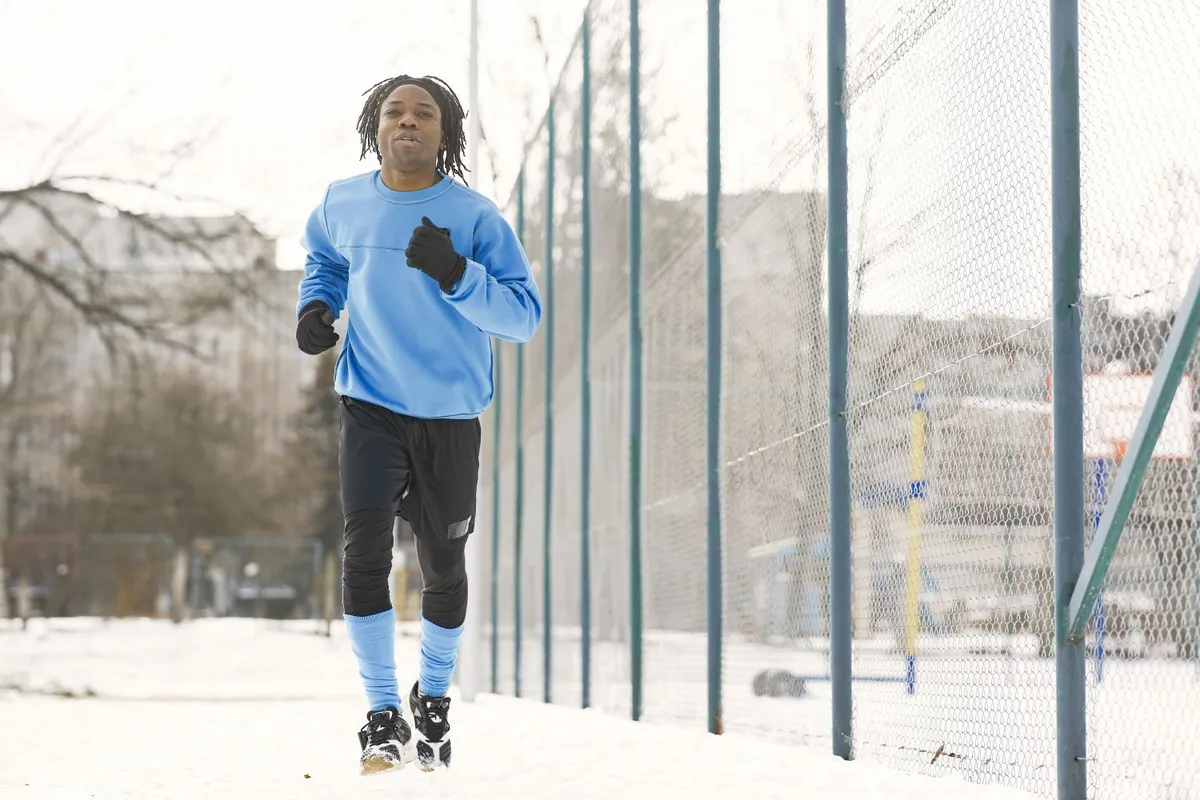
Check exposure, not just the temperature
Wind chill describes heat loss from exposed skin; it is not a predicted running pace or your core temperature. Wet clothing and time outside add risks the number does not fully describe. Check the forecast, wind, precipitation and route surface. A dry 35°F (2°C) afternoon and a wet, windy one need different decisions. Follow local alerts; no single temperature makes every run safe.
Build layers you can adjust
Start with a moisture-managing base, add insulation as needed, and use a breathable wind or rain layer for exposure. Vent or remove a layer before sweat soaks it. Protect hands, ears and exposed skin; avoid squeezing thick socks into shoes that become tight. Carry a dry layer for the finish. Clothing needs vary with the person, pace and time spent standing.
Warm up and protect the purpose of the workout
Begin with gentle movement and an easy opening before faster work. Do not make the first icy block your interval start. If footing changes your stride, move the quality session to a cleared route or indoors. Judge easy running by breathing and effort rather than recovering every lost second. A treadmill substitution can preserve the purpose of the session without preserving every outdoor detail.
A practical winter-week example
Illustrative coaching scenario: your schedule calls for an easy run, intervals and a long run. Keep the easy run on a short loop with shelter nearby. Put intervals on a reliable surface or treadmill when ice prevents controlled running. For the long run, use loops near home so you can change layers, access supplies or stop early. These are planning choices, not a promise that a particular forecast is safe.
Fuel, drink and plan the finish
Keep your practiced fueling plan accessible with gloves on. Check that bottles and food remain usable in the conditions. Cold does not remove the need to eat and drink; avoid treating a hot-weather sweat measurement as your winter requirement. Use the fueling tool for serving arithmetic, then record what you actually consumed. Arrange dry clothes and shelter before the run so recovery does not begin with a long wait in wet kit.
Know when to stop
Numbness or pale skin can signal cold injury. Stop, seek shelter and get medical help for suspected frostbite. Confusion, loss of coordination or unusual drowsiness can indicate hypothermia: call emergency services rather than trying to finish the run. If you have asthma or another condition affected by cold, discuss a personal plan with your clinician. A web guide cannot assess your individual risk.
Log what worked for the next cold day
Record temperature in °F or °C, wind, wetness, route surface, layers, session duration and perceived effort. Add whether your hands stayed comfortable, clothing became wet or stops made you cold. Bring those observations to your coach. Comparing similar sessions is more useful than using a universal cold-pace penalty.
Common questions
Should I use the heat calculator for cold runs?
No. A heat adjustment does not become a validated cold model by entering a lower temperature. Use effort, footing and conditions to make the session decision.
Is there a temperature below which everyone should stay inside?
There is no universal personal safety cutoff. Wind, wetness, clothing, exposure and health all matter. Follow local warnings and choose an indoor option when you cannot manage the conditions.
Can I train myself to tolerate cold by wearing less?
Do not use underdressing as a training goal. Rehearse suitable kit and route decisions; tolerating discomfort does not establish protection from cold injury.
PUT IT INTO PRACTICE
Take the next step.
Sources & author
References and further reading. Research findings, practical examples and coaching interpretation are different kinds of evidence.